

Coral Reefs at the Tipping Point: What Happens Now?
Angela ZancanaroThe Ocean’s Brightest Cities Are Fading
I started diving in 2020 and instantly fell in love with the ocean. Back then, I didn’t know much about coral or what it looks like when its struggling. Now, every time I travel, I see more broken reefs, more bleached coral, more algae growing, and eerliy silent oceans. The vibrant reefs I once dreamed of seeing feel like something from the past, and I fear I'll never see the same vibrant reef my mom got to see back in the 70s.
Coral reefs are like the beating heart of the ocean and they are in serious trouble. According to the Global Tipping Points Report 2025, scientists say we’ve already passed the coral reef “tipping point.” That means reefs are now dying faster than they can recover.
Scientists measure how much the ocean has warmed since pre-industrial times (1850-1900) which is about 1.4°C, and they measure that coral reefs can only tolerate about 1.2°C before they start to collapse. That threshold has been crossed. Mass bleaching events that were once rare, are now happening almost annually.
It’s hard to imagine the ocean without coral, but that’s the direction we’re headed unless we act fast.
Why Coral Reefs Matter

Coral reefs cover less than 1% of the ocean floor, but they support a quarter of all marine life. Thousands of species rely on reefs for food, shelter, and breeding grounds, from tiny reef fish to sea turtles and sharks. Reefs are the foundation of entire ocean ecosystem, and when they’re healthy, everything around them thrives including us.
Reefs also protect life above the surface. They act like natural seawalls, absorbing wave energy and reducing the impact of storms and erosion along coastlines. For millions of people living near the ocean, coral reefs help determine whether a shoreline stays intact or floods during major storms.
They support fisheries, tourism, and local economies that provide food and income for nearly one billion people worldwide. When reefs are alive and functioning, they quietly support both ocean life and human life at the same time.
How Long Until We Feel It

The sad thing is, we already are feeling the effects of a colapsing reef.
The last few years have been the worst period for coral bleaching ever recorded. Heat stress events that used to be rare are now happening back to back, leaving reefs no time to recover. Entire regions, including parts of the Great Barrier Reef and the Caribbean, have already lost more than half of their coral cover. For a lot of people, coral bleaching feels far away. If you don’t snorkel or dive, it can seem like something happening somewhere out of sight, but the effects don’t stay underwater for long.
If the planet keeps warming at the pace it is now, scientists say many reefs could lose their ability to support marine life within the next 10 to 20 years. That’s within our lifetime. It means reefs changing so dramatically that they no longer function as reefs at all. It’s hard to wrap your head around that.
What Happens When the Coral Is Gone
When coral reefs die, everything around them starts to unravel. Smaller reef fish vanish first, then the sharks and larger predators that rely on them. Sea turtles, octopus, and countless other species lose shelter, and then the food chain starts to collapse piece by piece.
As fish disappear, algae begins to take over and smothers what little coral remains, blocking sunlight and preventing its recovery. At the same time, the physical structure of the reef begins to break down. When reefs collapse, storms hit harder and waves travel farther inland. Homes near the water face repeated flooding and erosion. Roads, wells, and infrastructure are damaged again and again.
For coastal communities, this is where daily life starts to change. Millions of people rely on fish as their main source of protein. Fishing families bring home less food. Over time, the cost of living rises, seafood becomes more expensive, and jobs tied to fishing and tourism disappear. Some families are forced to move because the ocean they depended on can no longer support them.
here’s the part that keeps me up at night. When coral reefs die, the ocean becomes less able to help regulate the planet’s climate. Healthy reefs support ocean systems that absorb and cycle carbon dioxide. When reefs collapse, that balance weakens.
At the same time, warmer oceans physically absorb less carbon dioxide. More carbon stays in the atmosphere, which causes the planet to heat up even faster. Hotter oceans lead to more coral bleaching, more reef loss, and even less climate regulation.
It becomes a feedback loop. Warming kills reefs. Reef loss accelerates warming. And the longer that cycle continues, the harder it becomes to slow it down.
What We Can Still Do

It sounds really dark, but there’s still hope. No one can do everything, but everyone can do something. When enough people make small, consistent changes, it adds up faster than we think.
I had a friend once who refused to stop buying bottled water. She said she preferred the taste to an in-home purifier and that it was fine because she recycled. That mindset is everywhere and thats the part that needs to change. We tell ourselves that as long as we recycle, or as long as we care, it somehow balances out.
One person doesn’t change the planet. The problem isn’t your single action in isolation.
The problem is that the same mindset gets repeated 8 billion times. People all thinking “my habits don’t matter” when they absolutely do.
here are 5 things that actually make a difference. You don’t have to do everything. Pick one or two and start there.
1. Lower your carbon footprint
That can look like combining errands, choosing energy-efficient appliances, supporting renewable energy programs if they’re available where you live, and being more intentional about travel. For the emissions that are unavoidable, carbon offset programs help counter impact by funding renewable energy, forest protection, or carbon removal projects.
Look for verified programs like Gold Standard, Cool Effect, or MyClimate.
2. Reduce waste and single-use plastics
Single-use plastics are tied directly to fossil fuels and ocean pollution. Using refillable water bottles, reusable bags, and cutting back on disposable packaging helps reduce demand upstream. Being mindful about household cleaners, soaps, and personal care products also matters. Choosing gentler options and avoiding pouring chemicals down sinks or toilets reduces the pollution that flows from land to sea. Small, everyday choices around waste add up faster than we think.
3. Vote with your dollar
Where you spend your money shapes the systems we all live in. That includes the food you eat, the clothes you buy, the trips you take, and the brands you support. Choosing sustainably sourced seafood, buying less fast fashion, supporting responsible tour operators, and opting for products that reduce waste and pollution all help reduce pressure on the planet. You don’t have to be perfect. Buying less, choosing better, and being a little more intentional sends a signal that adds up when millions of people do the same.
4. Be a reef-safe human.
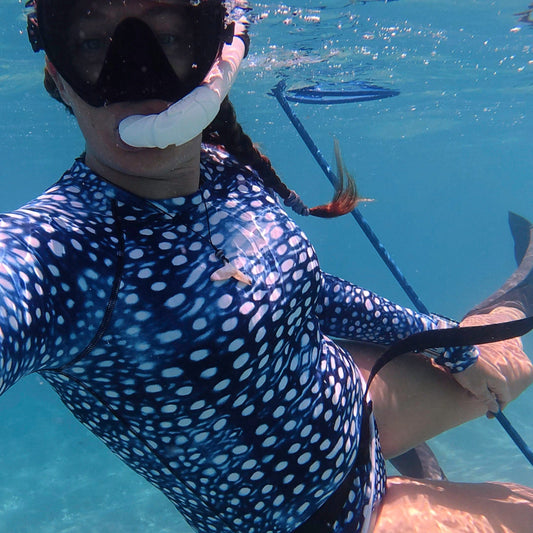
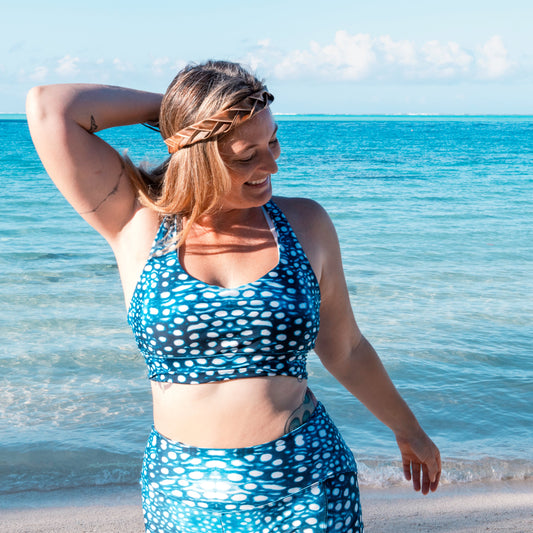
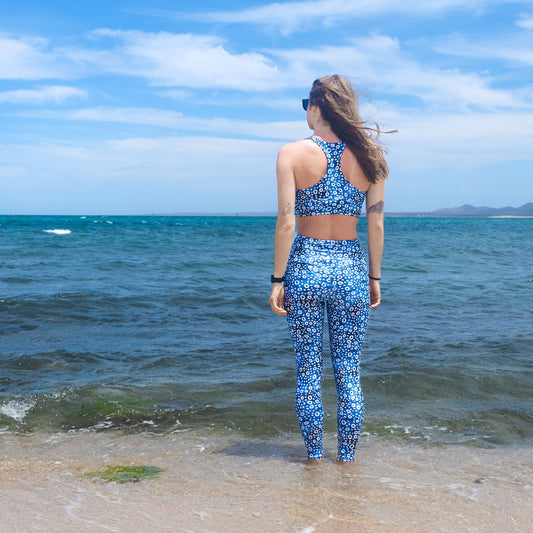
When you’re in the ocean, your actions matter. Cover up instead of lathering up by wearing UPF 50+ swimwear. That’s exactly why I designed Salinity Swimwear. Use reef-safe sunscreen when needed. If you dive or snorkel, never touch or stand on coral. Even a small touch can kill it. Beyond your time in the water, supporting coral restoration projects helps protect and rebuild reefs that are already struggling. Donations, memberships, or even sharing their work all help keep these efforts going.
5. Talk about it
Real change starts with awareness. Share what you’re learning, talk about the ocean, climate, and coral reefs with friends and family, post articles or experiences that resonated with you, and ask questions instead of staying silent. Support local policies and leaders that protect coastlines, water quality, and renewable energy, because community-level decisions often have the fastest impact. You don’t have to be an expert or loud about it. Simply caring out loud helps shift the global mindset. When information spreads, values shift, and change becomes much harder to ignore.
So where does that leave us?

No, coral reefs can’t fully recover right now. Scientists say the planet would need to cool back below about 1.2°C for reefs to return to what they once were, and that isn’t likely anytime soon.
But that doesn’t mean it’s over.
Some coral species are adapting. Some deeper reefs are still hanging on. And around the world, people are restoring damaged reefs and protecting what’s left. The reefs of the future may look different, but living reefs are still possible if we give them the chance.
We may be past the tipping point, but we’re not past the point of action. The ocean has always been resilient. It just needs our support now more than ever.
If you want to dive deeper into what’s really happening with coral reefs and other climate tipping points, you can read the summery Global Tipping Points Report 2025 .